Content
An example of such a model is a combination of cent (B-Book) and ECN (A-Book) accounts. There is no conflict of interest in this model since the types of brokers in forex broker does not act as a counterparty to transactions. The No Dealing Desk or NDD type of forex broker lacks a dealing desk, as the name implies. Nevertheless, it instead offers the best composite quotes obtained from the multiple forex quote providers that give the NDD broker its liquidity in the forex market. An ECN broker isa forex financial expert that uses electronic communicationsnetworks (ECNs) to give clients direct access to other participants in currencymarkets.
- While STP order routing also accommodates anonymity, it lacks transparency and consistency.
- Additionally, XM offers a VPS service for uninterrupted trading and a CopyTrader feature for those who prefer social trading.
- As a result, their processed transactions might be susceptible to slippage and fail to process orders swiftly.
- In the case of brokers, this allows them to generate profits from spreads between banks, currencies and specific time periods, in addition to transaction fees.
- The liquidity providers are generally big professional dealing desks at banks and funds, and they do not engage in any shenanigans about partial fills or other ways of screwing up your orders.
- The A-Book hybrid forex broker model is one of the most common ways of technological support for trades execution employed by large brokerage companies.
Different Types of Forex Brokers

Brokerage – the term sounds complicated, but simply means a person or a company that acts as a bridge between people who want to invest and the place of trading (stock exchange or real estate market). To close the trade, the trader sells the pair, which is equivalent to buying U.S. dollars with euros. From what I’ve written above, if you’ve even bothered to read it, https://www.xcritical.com/ you’d already know that they can have the pros and cons of both A and B book brokers. So, it’s hard to define their advantages and disadvantages because that depends on the way they’d decide to act when executing your order. Filippo Ucchino created InvestinGoal, a comparison site and educational portal for the online trading and investing industry.
Direct Market Access (DMA) Brokers
More trading opportunities and additional options for Proof of space portfolio diversification are an advantage for traders. The most remarkable aspect of today’s forex brokers, however, is that they have evolved beyond simply being a forex brokerage. When you dealing with a regulated broker, you know that the broker follows the rules and guidelines of their regulatory agency. They try to keep their client’s fonts in separate accounts to increase safety. An Interbank is a system or, better say, a network of banks that trade with one another.
What Is Another Name for Forex Trader?
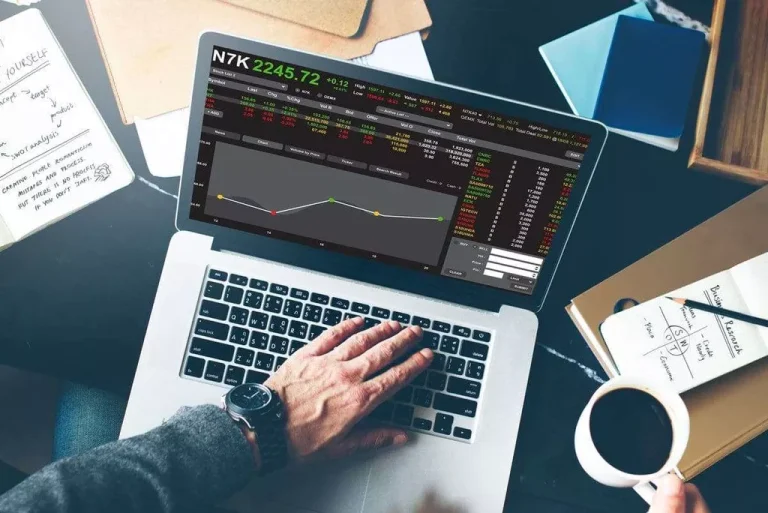
However, deciding between the two options might prove challenging, as numerous factors and variables must be considered. While STP Forex brokers share many similarities with their ECN counterparts, they differ in several crucial ways. Particularly for regular traders, a tight spread lowers trading expenses.
An experienced copywriter with a deep financial background and a knack for producing accessible, fascinating and valuable content. I demystify the world of fintech and crypto by producing engaging content in this field. I believe that every intricate concept, idea and methodology can be presented in an understandable and exciting way, and it is my job to find that way with every new topic. I constantly challenge myself to produce content that has indispensable value for its target audience, letting readers understand increasingly complex ideas without breaking a sweat. Matching brokers, by definition, do not carry Forex positions on their own books and are closer to a true broker in the sense of serving only as a middleman.
Non-Dealing Desk brokers decide what bids and offers to show from among their liquidity providers, reducing confusion. In some cases, a commission is charged for each transaction directly related to the volume traded – the higher the volume, the greater the commission. In some other cases, no commission is charged on the trading account, but usually, this type of account offers wider spreads. But the most impressive thing about current Forex brokers is that they are no longer just Forex brokers.
Partnerships with Tier 1 banks and liquidity providers enable low spreads starting from 0.0 pips on Razor accounts (with applicable commissions and swap fees) and commission-free standard accounts with low spreads. The commission structure on Razor accounts can be a disadvantage for traders with smaller accounts. When it comes to navigating the world of forex trading, understanding the different types of brokers available is essential. From market makers to ECN brokers, each type offers unique advantages and disadvantages that can impact your trading experience. To help you make an informed decision, we have compiled a list of 2 articles that delve into the various types of brokers in forex and how they operate.
However, in the eventthat there are no matching orders, they will have to take the opposite side ofyour trade. When a dealing desk broker accepts atrade, they may or may not trade in the underlying market to cover theirexposure. They may also offset this exposure with other clients’ opposingtrades that are similarly kept ‘in house’. This practice of keeping trades inhouse is known as running a ‘B book’, and it enables dealing desk brokers tokeep all of the profit on its clients’ losing trades. The profitability of Forex trading depends on key factors, including market conditions, trading strategy, risk management, and individual trader psychology.
When we say we know it is overwhelming to look for a lot of information, you’re in good hands; we’ve been trading for so long, not just in forex markets but the whole financial and gold bullion markets. Let’s assume you have three separate liquidity providers with your NDD STP broker. They can see three separate pairs of bids and ask for quotes in their system. Every model has its pros and cons, in terms of order execution speed, trading costs and slippages. I would recommend trying both models and choosing the one most suitable for your trading style and trading system.
The first step in choosing a forex broker is finding out what your choices are. The matter is that to bring client orders to the external market, brokers need to make contracts with a liquidity provider (and, as a rule, not just one), obtain licenses, provide technological support. All these are costs that the A-Book broker compensates at the expense of high mark-up to the spread. What your broker will do is that they’re not going to give me a better spread as being offered on the liquidity providers.
The broker can create its own ECN system, but then it becomes senseless, as there will be a relatively small number of participants. Other brokers present themselves as STP, being in fact common Dealing Desks or kitchens. After all, a B-Book kitchen scheme does not always mean a scam, so do not hurry to put labels. While the image earlier provides a hint, the answer to this question is like the relationship status that some of you all might’ve displayed on Facebook in the past….
If a large client places a large order within the system, the broker will have to either act as a counterparty or allow slippage. Both variants are the features of a kitchen, which do not promise anything good to a trader. Compared with the volumes of interbank transactions, the internal volumes on the broker’s platform are too small. The market maker’s objective is to capture a portion of the spread and to do sufficient volume on both sides of the market to avoid having to lay off accumulated risk with another professional counterparty. Choosing a forex broker will be the first crucial decision you’ll make as a new trader. Basically, the broker will take my order, and route it to a liquidity provider.
Considering the market’s liquidity, trading volume and volatility is crucial before opening their first position. Success depends on establishing how to trade and having an operations and risk management plan. A trader speculates whether the value of a currency will rise or fall against another. You have probably already heard of large companies that have a trading desk. They are known as Market Maker or DD broker (dealing desk), and they actually build an internal market, so they do not depend on interbank liquidity. Sucden Financial, established in 1973, is one of the longest-standing forex brokers in the market.